


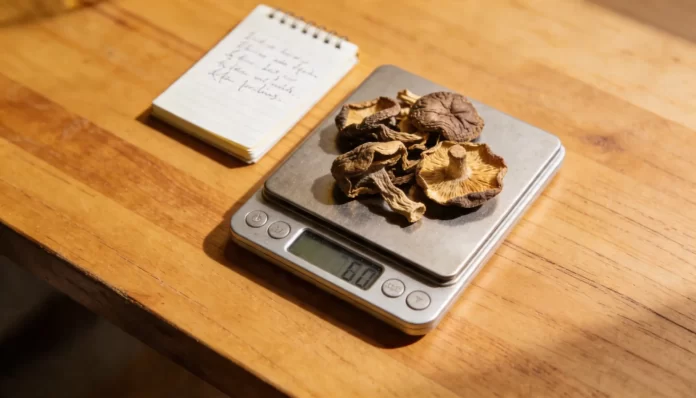
Growing scientific interest in psilocybin has brought psychedelic mushrooms back into focus, especially in conversations around mental health and well-being.
As a result, many people trying to understand what a safe dose is can have difficulty finding clear, reliable guidance outside controlled research settings. Scientific studies rely on precise measurements and controlled environments, but everyday situations are far less predictable.
In this article, we explain the current scientific consensus on dosing, focusing on safety, variability, and key factors to consider before use.
What Are Psychedelic Mushrooms and How Do They Work?
Psychedelic mushrooms contain psilocybin, which the body converts into psilocin after ingestion. Psilocin interacts primarily with the brain’s serotonin receptors, especially those linked to mood, perception, and cognition.
Research shows that psilocybin can temporarily alter brain connectivity patterns. These changes are associated with shifts in perception, emotional processing, and self-awareness.
One of the most important points is that these effects are highly dose-dependent. Small changes in dosage can lead to very different experiences, which is why scientific studies rely on carefully measured and standardized amounts.
Understanding Dosage: From Low to High Doses
In research settings, scientists measure psilocybin dosing in milligrams of the pure compound, not whole mushrooms. This allows scientists to control exactly how much is given.
At home, however, people are dealing with natural mushrooms, where potency can vary significantly from one batch to another. This makes it much harder to match the types of doses used in studies.
Common Dose Ranges In a Scientific Research Context
Researchers typically group doses into broad categories:
- Very low dose (below perceptual threshold)
- Low dose (mild perceptual changes)
- Moderate dose (clear psychological effects)
- High dose (intense, immersive experience)
The same “dose” can feel very different depending on the person, the environment, and the specific mushrooms used.
Clinical protocols supported by organizations like the Multidisciplinary Association for Psychedelic Studies show that dosing happens under tightly controlled conditions that are difficult to replicate outside of a lab.
If you’re trying to apply this information in real-world conditions, the key takeaway is that there is no exact way to translate research doses into mushrooms with consistent accuracy. Even when of the same species, mushrooms can vary in strength, and small differences in amount can lead to noticeable changes in effects.
Why Dosing Is Difficult to Standardize
Unlike pharmaceutical medications, psychedelic mushrooms are a natural product with significant variability and several factors influence how a dose may affect the person taking them:
- Biological differences: Body weight, metabolism, and brain chemistry all play a role
- Mental state (“set”): Mood, expectations, and psychological background can shape the experience
- Environment (“setting”): Physical surroundings and social context matter
- Tolerance: Previous exposure to psychedelics can reduce sensitivity
Microdosing vs Full Dosing
You’ll often see discussions of psychedelic mushroom use in terms of microdosing and full (or “macrodose”) experiences.
As the name suggests, microdosing mushrooms involves taking very small amounts that don’t produce noticeable perceptual effects. Full dosing leads to more pronounced psychological changes.
How to Approach Dosing Safely Based on Current Evidence
Evidence-based safety principles can help guide how to approach dosing and what to watch for:
Start Low and Understand Variability
One of the most consistent findings across research is that effects increase non-linearly with dose. This means that small increases in the dose can lead to noticeably stronger experiences.
Because mushroom potency varies, it’s difficult to predict strength accurately. This means:
- Effects may be weaker or stronger than expected
- Two experiences with the “same amount” may feel different
For this reason, starting at the lowest end of a range and avoiding rapid increases reduces the likelihood of overwhelming psychological effects.
Pay Attention to Set, Setting, and Timing
Scientific studies consistently highlight the importance of “set and setting”:
- Set (mindset): Your mood, expectations, and mental health state
- Setting (environment): Your surroundings and the people around you
A calm, familiar environment is associated with more manageable experiences. Avoid consuming psychedelics in unfamiliar or stressful environments, as these can increase the risk of anxiety or confusion.
Timing also matters and effects typically begin within 30–60 minutes, peak after 2–3 hours, and can last 4–6 hours or longer. Planning for this full duration is important.
What Effects to Expect at Different Doses & Safety Precautions
Individual experiences vary, but research has established general patterns of what you can expect:
- Lower doses: Subtle mood changes and slight sensory enhancement
- Moderate doses: Noticeable changes in perception, emotions, and thought patterns
- Higher doses: Strong alterations in perception, sense of self, and time
Effects can become intense and unpredictable at high doses and it’s where users report the most challenging experiences, such as anxiety or panic.
You can follow some steps to improve your chances of having a positive experience:
- Avoid combining psilocybin with other substances, including alcohol
- Do not use if you have a history of psychosis or certain psychiatric conditions
- Avoid situations that require attention or coordination (such as driving)
- Ensure someone sober and trusted is present in case support is needed
It’s also important to consult a qualified medical professional before considering the use of a psychedelic substance, especially if you have underlying health conditions or take other medications.
When to Seek Medical Help
Most psilocybin experiences resolve on their own, but seek medical attention if:
- Severe confusion or agitation persists beyond the expected duration
- You experience a panic reaction that doesn’t improve with reassurance
- You develop physical symptoms such as chest pain, difficulty breathing, or loss of consciousness
Why Education and Legal Context Matter
Interest in psychedelics is rising, but reliable information remains limited, which can lead to confusion or unsafe decisions. Research continues to improve our understanding of psilocybin, though many questions, especially around long-term effects, remain.
Laws also vary widely. In many countries, psilocybin is illegal, while places like Oregon and the Netherlands allow regulated use under specific conditions. In most cases, access is still restricted to research or licensed programs.
Because of inconsistencies in research, legality, and biology itself, dosing is not one-size-fits-all. It depends on the individual and context, so relying on evidence-based information is key as research and regulations continue to evolve. Always consult a medical health professional before using psychedelics.