


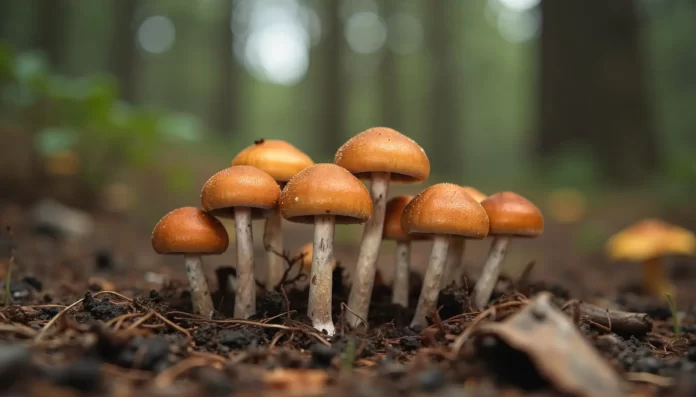
The short answer is no; psychedelic mushrooms (psilocybin mushrooms) are not legal statewide in California. Possession, cultivation, sale, and distribution remain illegal under both California and U.S. federal law.
That said, California’s approach has evolved in recent years. Several cities have decriminalized psilocybin at the local level, and multiple state bills have advanced the conversation. Understanding what’s legal, what isn’t, and where enforcement actually happens matters if you live in or are visiting California.
Current Legal Status of Psychedelic Mushrooms in California
Under California law, psilocybin and psilocin are Schedule I controlled substances. This means:
- It’s illegal to possess, grow, sell, transport, or give away
- No recognized medical use under California law
- Criminal penalties can apply even for personal possession
Federal law mirrors this classification, so psilocybin remains illegal across the U.S., regardless of local reforms.
What decriminalization does (and does not) mean
In some California cities, enforcement of psilocybin-related laws has been designated the lowest law-enforcement priority. This does not legalize mushrooms. It simply reduces the likelihood of arrest or prosecution at the local level, and only within those cities.
Cities in California That Have Decriminalized Psilocybin
Several California municipalities have adopted “decriminalize nature” policies. These measures typically apply only to adults and don’t permit commercial sales.
Oakland
In June 2019, Oakland became the first U.S. city to adopt a decriminalization resolution for psilocybin and other entheogenic plants and fungi. The city council unanimously passed a measure directing that no city funds or personnel be used to enforce criminal penalties against adults for using, possessing, or growing these substances. However, it’s important to note that this change doesn’t make psychedelic mushrooms legal. The substances remain illegal under California and federal law, and state or federal authorities could still enforce existing prohibitions.
Santa Cruz
Santa Cruz’s city council passed a resolution making possession, personal use, and even cultivation of psilocybin mushrooms the lowest priority for law enforcement in January 2020. It followed Oakland’s lead but with a slightly broader scope that explicitly included cultivation for personal use. Santa Cruz’s measure was part of a grassroots push to treat personal psychedelic use more like decriminalized cannabis use in other cities, though commercial sale remains prohibited statewide.
Arcata
Arcata’s city council unanimously passed a resolution in October 2021 declaring that investigations and arrests for psilocybin and other entheogenic fungi and plants should be a low law enforcement priority, except in cases involving public safety risks (for example, DUIs or use near minors). The measure explicitly notes it does not affect commercial activities or university-owned property.
San Francisco
San Francisco’s Board of Supervisors unanimously approved a policy in September 2022 to make the enforcement of laws against entheogenic plants and fungi the lowest priority within the city. Like other cities, San Francisco’s approach doesn’t legalize psilocybin. Still, it intends to reduce arrests and prosecutions for people who use or possess these substances privately.
Berkeley
In July 2023, Berkeley passed a resolution that expanded decriminalization beyond psilocybin to include many entheogenic substances derived from plants and fungi. Berkeley’s policy emphasizes the lowest law enforcement priority for personal possession, use, and cultivation (except for certain synthetics or peyote, which are excluded).
Eureka, CA
Eureka’s city council unanimously adopted a resolution in October 2023 similar to Arcata’s, making the investigation and arrest of adults for possession and cultivation of entheogenic plants and fungi (including psilocybin mushrooms) the lowest policing priority.
Important to Understand
None of these city decriminalization measures legalizes psilocybin mushrooms. They tell local law enforcement not to prioritize minor psychedelic offenses. Psilocybin remains a Schedule I controlled substance under California and U.S. law, so selling, transporting, distributing, or possessing mushrooms outside the narrow “lowest priority” context can still lead to state or federal charges.
A Brief History of Psilocybin Laws in California
Psilocybin became illegal in the U.S. in 1970 with the Controlled Substances Act. For decades, California followed a strict prohibition model.
Things began shifting after 2018:
- Local advocacy groups tied psychedelic reform to cannabis legalization momentum
- Research into mental health applications gained visibility
- Cities began adopting decriminalization resolutions
- State lawmakers introduced broader reform bills
The most notable effort was Senate Bill 519 (SB 519), followed by its narrower successor, Senate Bill 58 (SB 58).
Senate Bill 58 (SB 58): What Happened and Why It Matters
SB 58 aimed to decriminalize possession and personal use of limited amounts of certain natural psychedelics, including psilocybin, for adults 21+.
- Passed the California Legislature in September 2023
- Vetoed on October 7, 2023, by Governor Gavin Newsom
- Veto message called for a framework with clear therapeutic guidelines and safeguards
Importantly, the veto did not reject psychedelic reform outright. It signaled that future legislation tied to regulated therapeutic use may have a better chance of passing.
Penalties for Psychedelic Mushroom Offenses in California
Because psilocybin is a Schedule I substance, penalties can escalate quickly depending on circumstances:
Simple Possession
- Charged typically as a misdemeanor for small personal-use amounts.
- Potentially up to 1 year in county jail and/or fines of up to $1,000.
- Larger quantities or other aggravating factors may lead to a felony charge with much higher penalties (multiple years in prison).
Possession With Intent to Sell
Under California Health & Safety Code § 11351 HS, possessing a controlled substance with intent to sell is a felony:
- First-time violation may lead to 2, 3, or 4 years in county jail and/or
- Up to $20,000 in fines.
- Courts consider things like multiple baggies, large quantities, or drug-sale packaging as evidence of intent to sell.
Sale or Transport for Sale
- First offense of selling or transporting psilocybin can lead to 2–9+ years in country jail, depending on how many countries you crossed, and/or a fine of up to $20,000.
- For possession of more than ~1 kg of mushrooms, enhanced penalties (e.g., 3–25 years and an additional fine ranging from up to $1,000,000 to up to $8,000,000) are possible.
Paraphernalia, Being Under the Influence, or Related Charges
- Possessing drug paraphernalia can carry up to 6 months in jail and/or a $1,000 fine under Health & Safety Code § 11364 HS.
- Being under the influence of a controlled substance can bring its own misdemeanor penalties (including probation, counseling, or up to a year in jail), especially if tied to public safety issues.
- Growing psilocybin mushrooms is treated as manufacturing a controlled substance under California law, which can bring severe felony charges and significant prison exposure.
What Could Change Next?
California is widely seen as a likely candidate for future psychedelic reform, but most experts expect changes to come through medical or therapeutic frameworks, not retail legalization.
Key signals to watch:
- New bills building on SB 58 with clinical safeguards
- Alignment with Oregon and Colorado-style supervised programs
- Expanded FDA research approvals
- Shifts in voter sentiment (currently favorable to regulated therapeutic access)
Final Takeaway
Psychedelic mushrooms remain illegal statewide in California, despite growing local decriminalization and strong public interest. City-level reforms reduce enforcement risk but do not legalize psilocybin. Laws continue to evolve, and future legislation is likely to focus on regulated therapeutic use rather than full legalization.
If you’re in California, always check state law and local ordinances, and make sure your actions comply with current regulations. Laws can change quickly, and with Schedule I substances, the legal stakes are still high.