


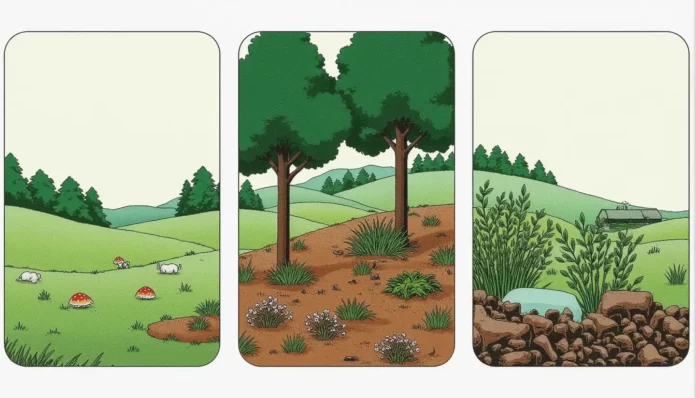
Psychedelic mushrooms, most famously those in the genera Psilocybe and Panaeolus, appear where moisture, organic matter, and suitable temperatures come together. They are not random; they follow ecological patterns. This guide explains the places and conditions where they’re most often reported, with safety and legal notes.
The short answer
In general, psychedelic mushrooms favor damp, nutrient-rich environments. They often arise in pastures and lawns, especially where manure or heavy fertilization is present, in decaying wood and forest litter, and in humid coastal or tropical zones. They tend to appear after steady rain during cool to mild weather.
Why habitat matters
Mushrooms are the fruiting bodies of underground mycelium. For fruiting to occur, the substrate must hold moisture, provide food such as manure, compost, wood, or leaf litter, and sit within a temperature range that is neither freezing nor excessively hot. When these factors align, mushrooms may develop within days, though timing remains unpredictable and varies by species and region.
Common habitats
Open grasslands, grazed pastures, and well-watered lawns are classic settings for several psilocybin-containing species, including some Panaeolus. In these places, nutrients are concentrated and humidity lingers near the soil surface, particularly after rain. In many temperate regions, the most active periods are autumn and spring, whereas subtropical and tropical areas see flushes tied to their wet seasons.
Forests and wood-rich edges offer a different but equally favorable niche. Many Psilocybe species feed on decaying wood, bark chips, and leaf litter. Shaded trails, downed logs, and urban mulch beds can provide long-lasting moisture and food. Rains that soak wood chips or duff are often followed by brief windows of fruiting once the surface drains and the air cools in the evening.
Coastal and other high-humidity belts create extended opportunities. Persistent fog, ocean breezes, and mild nights help prevent substrates from drying out. In the tropics, monsoon periods can prompt several fruitings a year when temperatures remain warm yet not scorching.
Seasons and weather patterns
In temperate climates, most sightings cluster in autumn, with a secondary pulse in spring when daytime temperatures are mild and nights cool. In subtropical and tropical climates, fruiting commonly follows the arrival of the wet season, with additional events when subsequent rainfall replenishes ground moisture. A frequent pattern is the appearance of mushrooms 48 to 72 hours after steady rain, once the ground is saturated but not waterlogged.
Genera you’ll hear about (without the jargon)
Psilocybe is the best-known group and includes species that often prefer wood-rich or forest-edge environments, though a few occur in grass. Panaeolus is a diverse, brown-to-white group commonly found in pastures and grassy sites; some species occur on manure, others on wood. Not every Panaeolus is psychedelic. A recent scientific overview counted 77 legitimate Panaeolus species and about 20 with reported hallucinogenic properties. Many records come from Asia, but the global picture is incomplete, and only a portion of species have DNA sequence data, which makes reliable identification challenging and an ongoing area of research. In practice, habitats overlap, names can be confusing, and look-alikes are common.
Urban and suburban settings
City parks, landscaped gardens, and roadside plantings can mimic natural habitats. Fresh wood-chip mulch and regular irrigation create cool, damp microclimates in which wood-loving species sometimes appear after rain. Fertilized lawns and sports fields may play a similar role for grass-associated species, particularly where watering schedules keep soils evenly moist.
Important cautions
Identification is difficult and risky to attempt without training. Many toxic mushrooms resemble psychedelic species in color and shape, and mistakes can cause serious illness. Wild mushrooms should never be eaten unless a qualified expert has confirmed them using proper methods, which may include microscopy or DNA sequencing. Laws vary widely by country and region, and picking, possessing, or cultivating these fungi may be illegal. Penalties can be severe. Although medical interest in psilocybin is growing, access remains regulated and should occur only through approved clinical programs.
Quick Info
- Psychedelic mushrooms are not everywhere, but they occur on most continents where local climate, moisture, and substrate are favorable.
- Manure is not required for all species; some prefer pastures, while others are tied to wood, mulch, or forest litter.
- The same lawn or mulch bed can fruit in successive years if the mycelium survives and similar weather patterns return, but it is never guaranteed.
Final advice and disclaimer
Laws can change quickly, so always check the latest local rules. Treat this guide as an ecological background, not instructions to collect or consume. If you venture outdoors, do so smartly, discreetly, and respectfully, and keep safety, legality, and environmental care at the forefront.